season/2026

REBUILT — 2026 Season

Our first competition season as an FRC team, built around UPLOAD — from kickoff strategy to a Pacific Northwest District Rookie All-Star award and a trip to the FIRST Championship in Houston.

AwardPacific Northwest District Rookie All-Star, 2026
Season Record22–34–0, ranked #35 of the Pacific Northwest District
ResultQualified — FIRST Championship, Houston
ProgramRookie season — first year as an FRC team
initial-plan

What we locked in at kickoff

This season's game has teams intake FUEL from the ground and score it into the HUB. Every design call on UPLOAD traces back to strategy pillars we set before any part was cut.

01 · Ground intake, non-negotiable 02 · Score FUEL into the HUB 03 · ≥1 set scoring position 04 · Store ≥8 FUEL onboard 05 · Leave room to iterate
final-robot

UPLOAD — built for Rebuilt

Five subsystems, iterated across the season. Open one at a time on the left, or explore the full CAD assembly alongside them.
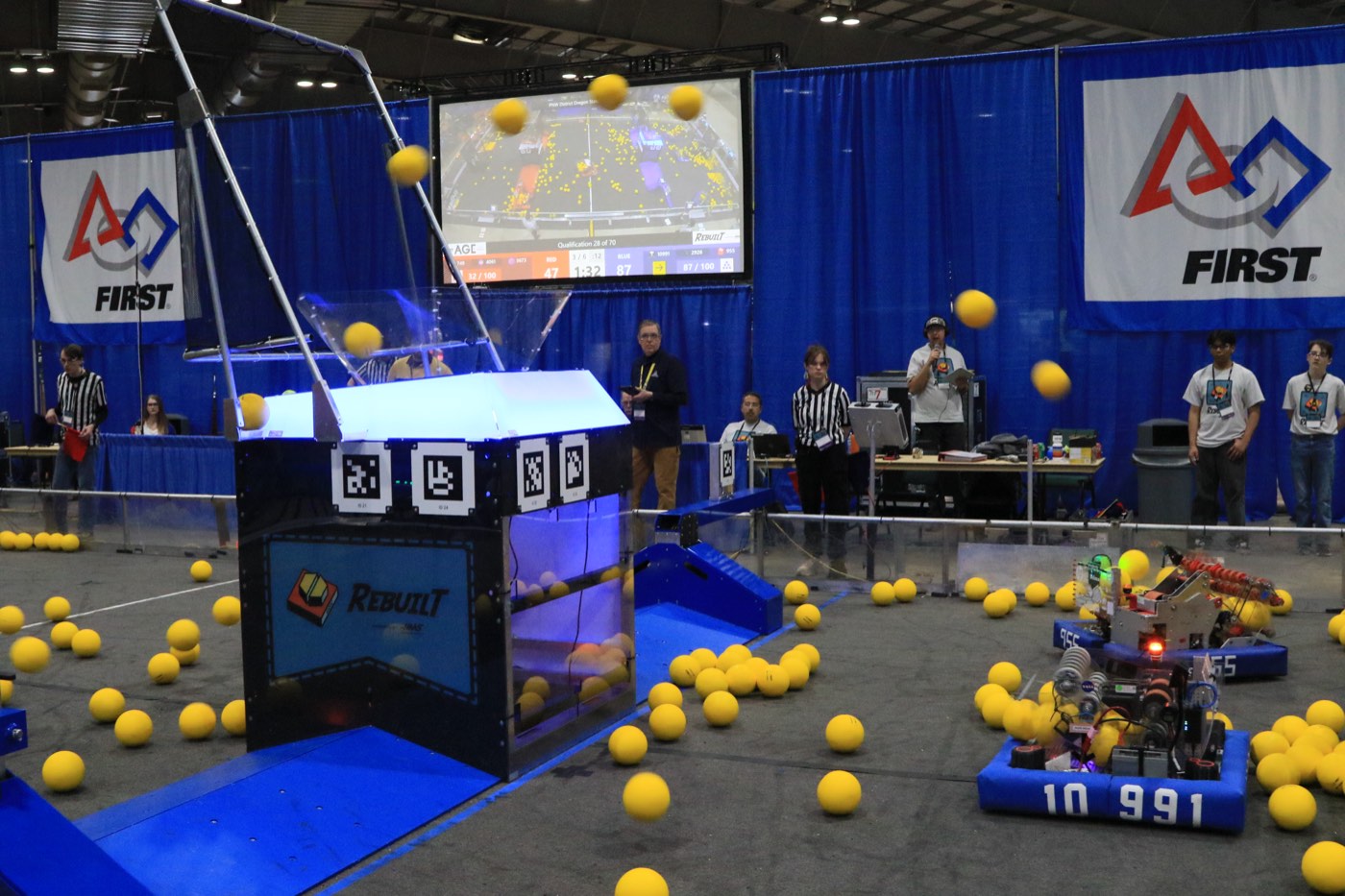
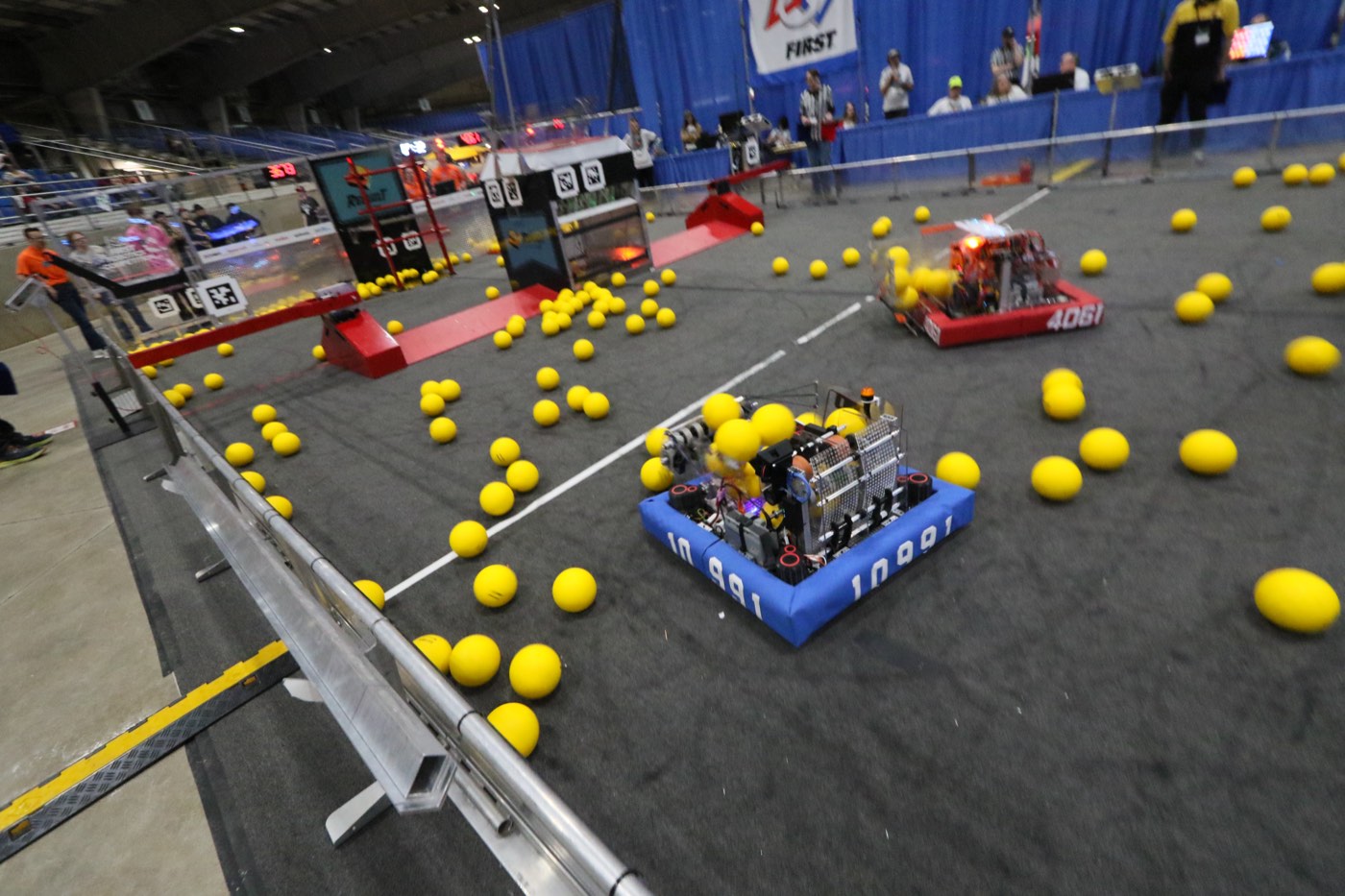
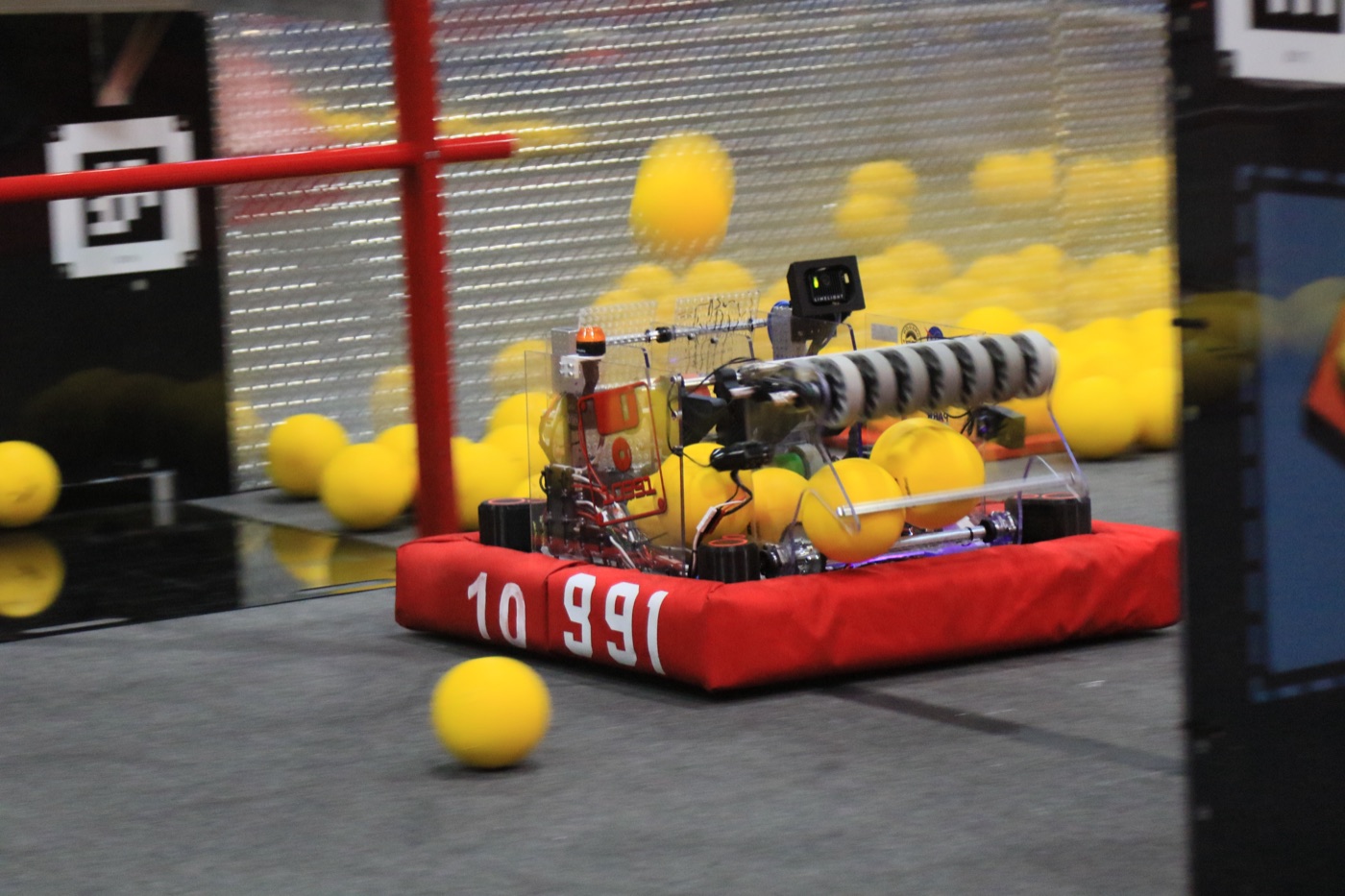
UPLOAD scoring near the HUB during a 2026 match
UPLOAD on the field during qualification match play
Fig. 1 — UPLOAD in qualification play, competing for the HUB.
Fig. 2 — UPLOAD robot reveal, produced by our Media department.
01

Launcher + Feeder

+
Center-mounted shooter

We scored a corner-mounted, spindexer-fed shooter against a simple center mount on a 1–5 T-chart. Corner "won" on cool factor; center won on everything else, so it became the plan — merged with the feeder into a single panel assembly.

  • Final version laser-cut from ¼" polycarbonate on our CNC router
  • Feeder jammed under load through our first competition
  • Fix: swapped belt-and-pulley for chain-and-sprocket at an 8:5 reduction — fully reliable since
02

Intake

+
Over-the-bumper

We picked over-the-bumper over an inline intake for structural integrity and drivability over the bump, after mentor input and analysis of a past swerve build.

  • Large contact wheels plus smaller guide wheels for fuel spacing
  • Single NEO 550, sprocket mounted direct to the gearbox to keep the intake cavity clear
  • Belted axles snapped in the final playoff match of event one — chain since event two, no repeat
  • Agitator simplified to a single bar of 3D-printed ribbed spacers after a belt-conveyor design ran out of room
03

Vision + Auto-Aim

+
Limelight 4 · MegaTag2 · NavX2

We built up from simple AprilTag-facing routines to full field localization with MegaTag2 — a two-month effort once we had the external gyro reading (NavX2) it requires.

  • 30 scoring poses mapped around the field, each with its own preset RPM
  • Driver holds "A" — robot drives to the nearest pose and faces the HUB automatically
  • We chose lock-and-hold over shooting on the move: more reliable for a first-year programming team, and steadier against defense
04

Autonomous

+
Left → Right → Center-Depot

Autonomous went from a single, somewhat-consistent left auto at our first event to a full three-path system by our second.

  • Right auto: the left path mirrored along the field's center line, for alliances needing a left-side partner
  • Left auto adjusted to stay clear of alliance partner 2471 Mean Machine
  • Center auto expanded to pull extra FUEL from the DEPOT — 5–6 more fuel than a preload-only path
  • Result: our alliance stayed undefeated in autonomous at event two, with one match over 100 points
05

Swerve Module Covers

+
Daisy-chained LED rings

Covers protect the drive and turn motors from impact and let us run wiring — and a full ring of LEDs — straight through and between modules. Everything runs off a single RoboRIO signal, color-coded for fast mid-competition fixes: red for power (5V), black for ground, white for the digital data line, chained module to module. Only the ground wire has to make the full loop back to the RoboRIO to close the circuit. The LEDs on each module indicate alignment and wheel direction, giving the drive team critical feedback at a glance.

CAD Model

The Complete UPLOAD Assembly

The full Fusion 360 model of UPLOAD, built and maintained by our Modeling department — every subsystem, from the launcher to the swerve modules, in one file.

Needs your input: drop in your Fusion 360 share link and we'll wire up the button below.
View Full CAD Assembly ↗
event-log

How we did, event by event

Our first competitive season, start to finish — from an early feeder jam to a Rookie All-Star award at the District Championship and a trip to Houston. Results via The Blue Alliance.

Week 1Oregon State FairSalem, OR · Mar 5–7
Rank: 25 of 35 Record: 8–9–0 Rookie All-Star Award 2nd pick, Alliance 2

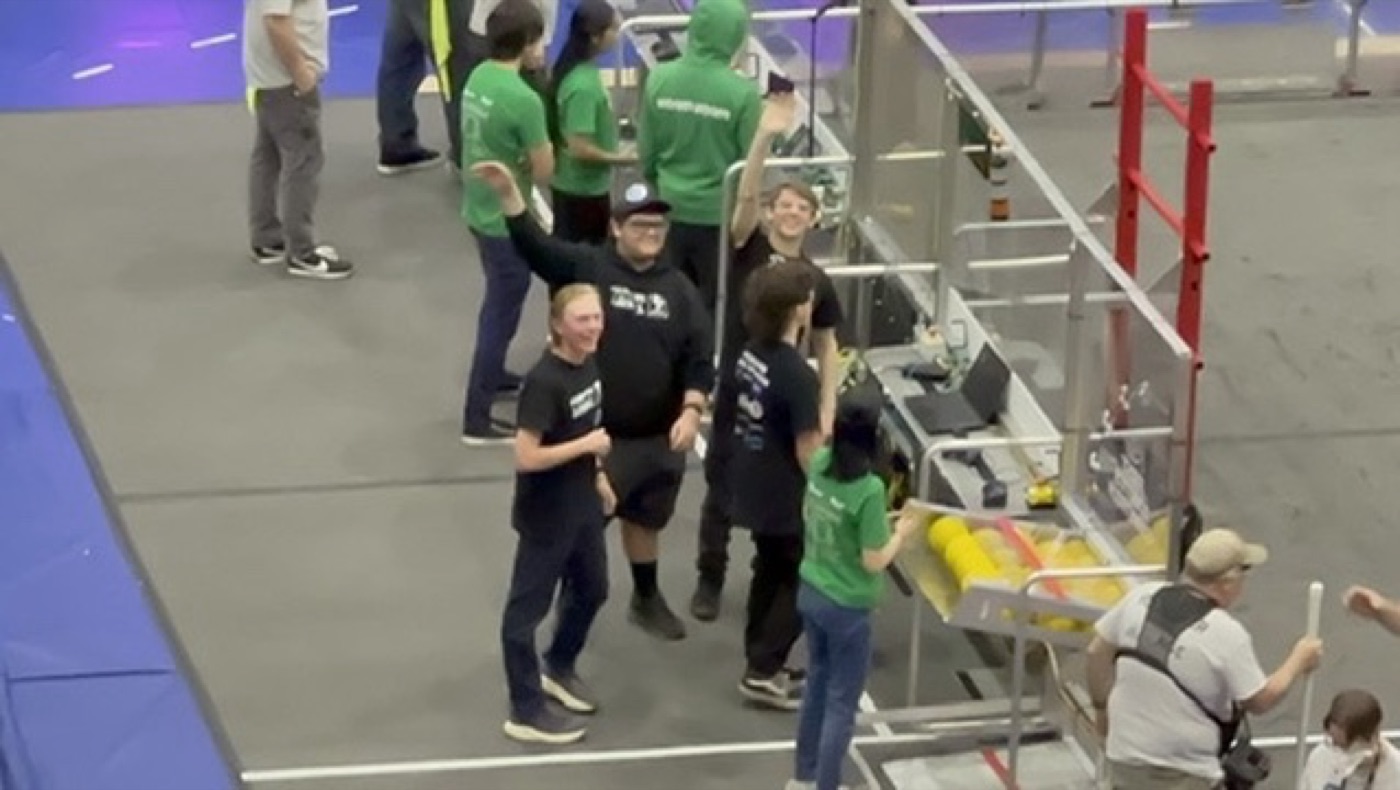
Our first competition running UPLOAD. A single left autonomous carried the early matches, but our feeder jammed repeatedly under load — a belt-and-pulley drive couldn't push through fuel that was already in contact with it, and the belt driving the intake's axles snapped during our playoff run. Eliminated in Round 5 of the double-elimination bracket, playing alongside captain 846 and pick 3674.

PioBytes competing at the Oregon State Fair district event
Week 4Clackamas AcademyOregon City, OR · Mar 26–28
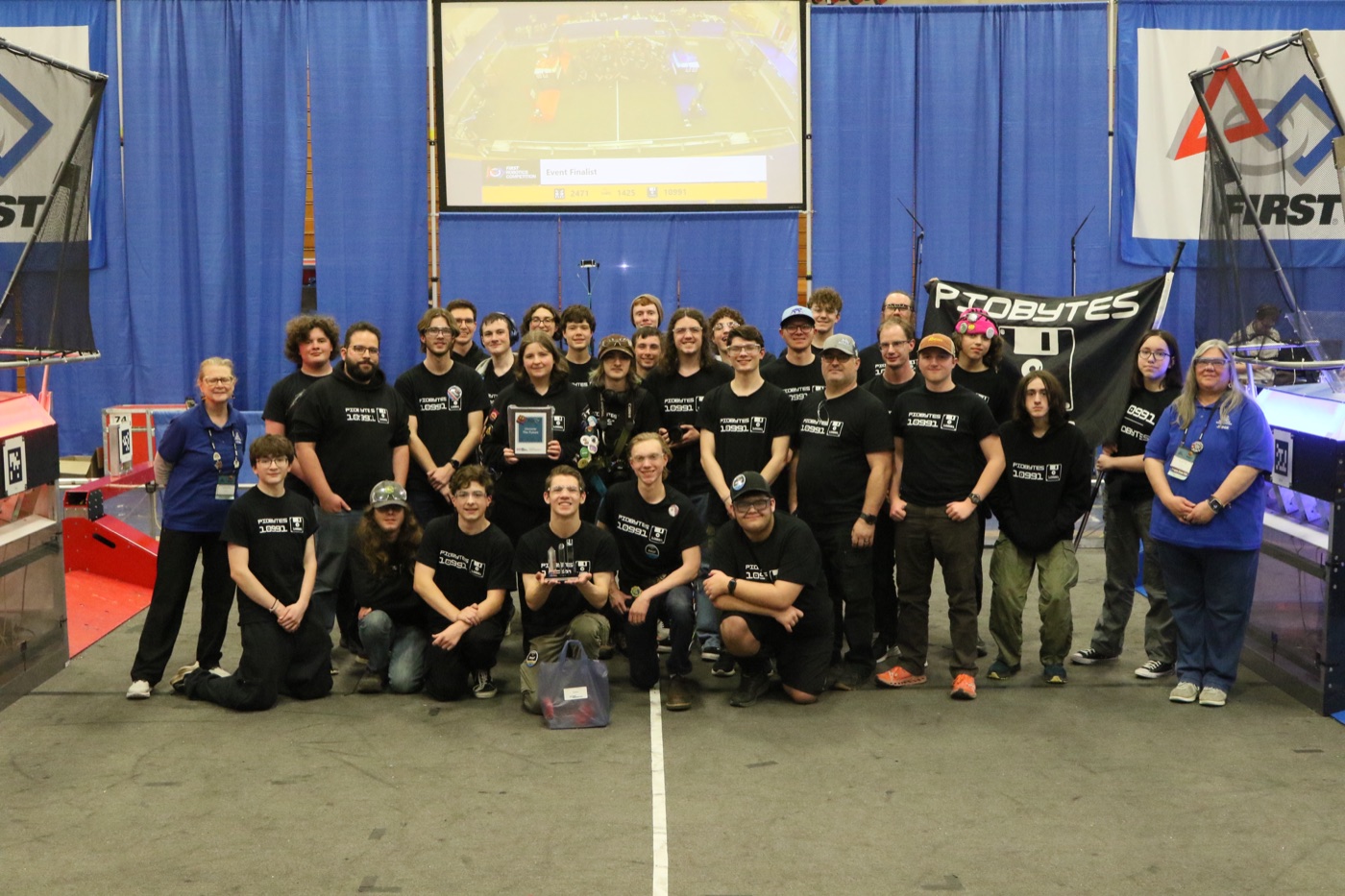
Undefeated in autonomous Rank: 26 of 35 Record: 7–10–0 District Event Finalist 2nd pick, Alliance 2

Between events, we swapped the feeder to a chain-and-sprocket drive and chained the intake axles — both fixes held for the rest of the season. We added a mirrored right autonomous and expanded our center auto to pull extra FUEL from the DEPOT. Our alliance stayed undefeated in autonomous all event, reaching the Finals alongside captain 1425 and pick 2471 before being eliminated.

PioBytes competing at the Clackamas Academy district event
Week 6Pacific Northwest District ChampionshipCheney, WA · Apr 8–11
District Championship Rookie All-Star Award Rank: 50 of 51 Record: 2–10–0

Our toughest event on the scoreboard, but the one that mattered most off it: the District Championship Rookie All-Star Award — the achievement that made us a Pacific Northwest District Rookie All-Star for 2026, and the result that punched our ticket to Houston.

PioBytes at the Pacific Northwest District Championship
FIRST ChampionshipGalileo DivisionHouston, TX · Apr 29–May 2
Qualified — rookie season Rank: 50 of 75 Record: 5–5–0

Qualified for and competed at the FIRST Championship in Houston in our very first season — the largest stage in FRC, reached by a rookie team most programs take years to get to. A .500 record in the Galileo Division against the best teams in the world, in year one.